Image Map
Showing posts with label Common Core. Show all posts

Sunday, December 18, 2016

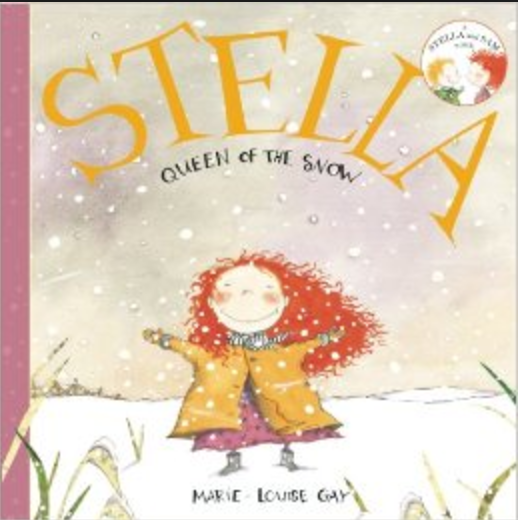
Book of the Week: Stella Queen of the Snow


Our book of the week is perfect for a snowy night cuddled with your little queens or kings. Stella Queen of the Snow, tells the story of Sam who had never seen snow and is not too interested, until his sister Stella explains,"Snow is as cold as ice cream but as soft as rabbit's fur." This intrigues Sam and he begins to ask Stella a flurry of questions about the snow. Full of descriptive language and bright pictures, this is the perfect book to introduce winter vocabulary. 


Vocabulary: 

Fort- short for fortress, a strong building
Silver- shiny gray color
Freeze- turning to ice
Breath- exhaled or inhaled air from lungs
Winter-cold season from 
Snowfall-amount of snow to fall. 
Fog-low lying clouds, close to the ground


Questions: 

Who are the main characters? 
Which character doesn't know about snow? 
Why does Sam wonder about the snow? 
Why do you think Stella is the queen of the snow? 
Do you think Stella is a real expert about the snow? Or do you think she is making it up? Why? 
Why does fog come out of their mouths?
Do you think Stella is a good older sister? Why or why not? 
How does Sam react to Stella helping? 
How do you help your siblings or family? 
Did you like this book? Why or Why not? 

This week with our younger students we are focused on comparing and contrasting characters. Please feel free to use the freebie worksheet we created for our students. You can get it here.


Tuesday, January 19, 2016

Videos to Introduce Text Structure


Over the past two weeks we have been focusing on nonfiction text structure. To introduce the different kinds Text Structure: cause-and-effect, problem/solution, compare/contrast, description and sequence. We found these simple and engaging videos from Youtube. 

Compare/Contrast


Cause-and-Effect

Sequence 

Description

Problem/Solution


Cheers to learning fun:) 

Monday, January 18, 2016

Hot Cocoa Thera-happy


It has been a dreamy, theme-filled January so far. Over the past two weeks our theme has been hot chocolate. An easy choice for the cold Minnesota weather! In the speech room we have continued with learning about nonfiction text structure, themes in a story, descriptive vocabulary and following directions. Here are the ideas and TPT products we used to incorporate our chocolatey theme:


This nonfiction text structure freebie by Primary Owl, was a perfect way to introduce text structures, it includes 5 posters and two worksheets for our 5th grade students. We also then used our own nonfiction text structure cards to deepen our students learning. 


To keep the students enthusiastic about text structure, we also played a game called the Cocoa Cup Champ. Students were given a "cocoa cup" and when they could name the text structure they could add a marshmallow (in our case a cotton ball) to their cup. The student who had the most correct answers and had their cup full of "marshmallows" was the Cocoa Cup Champ. 

A variant for some of my students was letting them make marshmallow baskets in the cup. Anything to please right:) 


For my students working on functional directions we read a hot cocoa recipe and followed the directions. Then everyone tasted their cocoa and we as a group came up with adjectives to describe the cocoa. Our group came up with: warm, light, bubbly, creamy, good, sweet, spicy, wet, sticky  steamy, yummy, and scrumptious. 


We used to this craftivity by Lauren Balogh write down our describers and for some additional following direction fun. 


While searching for ideas we also found these great freebies for additional speech language practice, Enjoy!


Wednesday, November 4, 2015

Book of the Week: The True Story of the Three Little Pigs


Summary:
In this book, Wolf (Alexander T. Wolf or Al) retells his version of what truly happened in the story of The Three Little Pigs. He claims he was baking a cake and ran out of sugar and simply went to the pigs houses to borrow a cup of the sweet stuff.  Unfortunately, he also had a cold and his sneezes knocked down the poorly designed houses made of sticks and straw. The pigs not being so bright both hid in their houses and were accidentally killed. At the third house smartest pig said mean things about his granny. The police and reporters caught up with Wolf and changed the story. This fractured fairytale is a fun version of events to compare with the traditional story and to discuss point of view.

Story Questions:
What is a Narrator?
Who do you think is telling the story?
Is the story told in 3rd person or 1st person?
Do you believe the wolf when he says he is nice? Why/why not?
What do you think will happen with the sugar? Do you remember that in the last story?
Why is it a bad idea to build your house out of straw?
What does he do with the 1st pig? Did this make your opinion about the wolf change?
What happens at the 2nd house when he rings the door bell?
What happened when the wolf sneezed again?
What kind of house does the last pig live in?
Do you think this story will end the same?
Where do you think the story took place.?
What happens at the 3rd house when he asks for sugar?
What does the pig say about the Wolf’s grandma
Do you think the wolf deserved to go to jail? Why or why not?
Did you like the story why or why not?

Vocabulary:
Shame- Painful feeling of humiliation
Bright- Producing a lot of light.
Impolite-opposite of polite
Rude- not respecting others
Fellow- a person or man
Scene –a view (like looking at a picture or movie)
Jazzed- fixed up or made up


Sunday, September 13, 2015

Book Of The Week: Shelia Rae, The Brave

Sheila Rae, The Brave by Kevin Henkes

Summary:
Shelia Rae is not afraid of anything, or so she says.  She's not afraid of the dark, of monsters, or thunder and lightening.  She insists that her sister, Louise is a "scaredy-cat."  She boasts and brags until her bravery is tested.  Sheila Rae discovers what being brave is really about!

Vocabulary:
fearless - to not be scared of anything
attack - to hurt or destroy something
block - an area in a town with four streets around it; one of the sides is called a block
stray - lost or without a home
bare - to show something that is not usually seen
growl - to make a deep, grumbling noise to show anger
evil - to have very bad behavior
scaredy-cat - someone who is scared of almost everything
convince - to get someone to believe something
dash - to move fast

Comprehension Questions:
Who is Sheila Rae?  Name three words that describe her.
Who is Louise?  Name three words that describe her.
How are Sheila Rae and Louise the same?  How are they different?
Why does Sheila Rae think she is brave?  (Share three ideas.) Is she really brave? How do you know?
What happens to Sheila Rae?  How does she feel then?  How is this different than how she feels at the beginning of the story?
What were two things Sheila Rae did when she was lost that showed that she was scared.
How does Sheila Rate feel at the end of the story?
What lesson did Sheila Rae learn?

We just posted a book study and optional close reading activity pack that is on sale at our store for the next 24 hours.  Check it out here!


Wednesday, March 25, 2015

Fairytale Inferencing

This trimester my reading students will be expected to read grade level text and determining inferences. For my students who are challenged by the reading process, it can be a struggle to motivate them to try targeted skills like inferencing about a story. I thought a wonderful way to introduce the skill of inferencing would be to practice with some classic fairytales to ramp up the enthusiasm.

 First we laid out pictures and objects to get the students inferring:


After the students were done looking at pictures and/or objects, they wrote down what each story was and then justified why they thought their answer was correct.


It was a hit. The students loved moving through stations and getting to explain their answers. You can get the picture posters and answer sheet at our TPT store here. 


Monday, March 2, 2015

The Life and Work of Dr. Seuss: A Nonfiction Text Structure Activity

Over the last few weeks, the students in our language arts intervention groups have been working on nonfiction text structure.  We have been working hard on increasing the complexity of text that we present to the students.  Initially, we started with simpler activities with a strong emphasis on visual supports and identifying clue words.  Our February 20th post, Non Fiction Text Structure, was a great example of this.  Next, we moved to task cards.  These cards included clue/signal words with a range of reading lexiles due to the tier 3 vocabulary.  The students were intimated by the lengthier passages, but they did fantastic!  (The passages were also used with our intervention group that was working on decoding multisyllabic words, another reason for the higher reading lexiles.)  They gained a lot of confidence reading the passages and discovered that their length had nothing to do with the actual content...and they rocked the content!  (If you're looking for this set of task cards, they are available here at our TPT store.)



Today, they were given another challenge.  I presented them with a full page of text, again, at a higher reading lexile for those students working on decoding.  They were excited to find that the text was about the life and work of Dr. Seuss.  Unintimidated, they started reading with confidence and excitement. After each paragraph, they were asked to determine what type of text structure was present and then provide evidence from the text to support their answer.  While I tried to be very pointed about the type of structure I embedded within each paragraph when wrote it, they were able to provide several great discussion points about the type of text structure they thought the paragraphs represented and why.  It was a much better activity than I anticipated! If you want to check it out, you can also find it at our TPT store.  It's free until this Wednesday at noon, so grab yours now!


Friday, February 20, 2015

Non Fiction Text Structure


Over the past few weeks my 5th grade language students have been trying to tackle Nonfiction text structure in their language arts classes. It has been a little daunting, but anything is doable with the right strategy. We started out going over all of the common text structures, I modeled how to use key words, reviewed task cards, and then used some texts that were below grade level to identify the kinds. My students were able to use a chart as a strategy and seemed to be making some connections when able to use the chart as a reference. The problem with this is that during state testing they have to be independent. Enter a great idea! What if we practiced drawing the text structure chart, my students then could draw out a visual cue to help recall the name when they need it. 

Here are the visuals and key words we came up with:


Students were helped with the visual but asked to come up with their own "Keywords"


Sequence:

Description:

Compare/Contrast:

Problem/Solution:

My hope is that when asked about the writing style of the author, they will be able to think of the answer very independently. Hope you can also use this strategy too!

Friday, February 6, 2015

TPT Blogger Swap


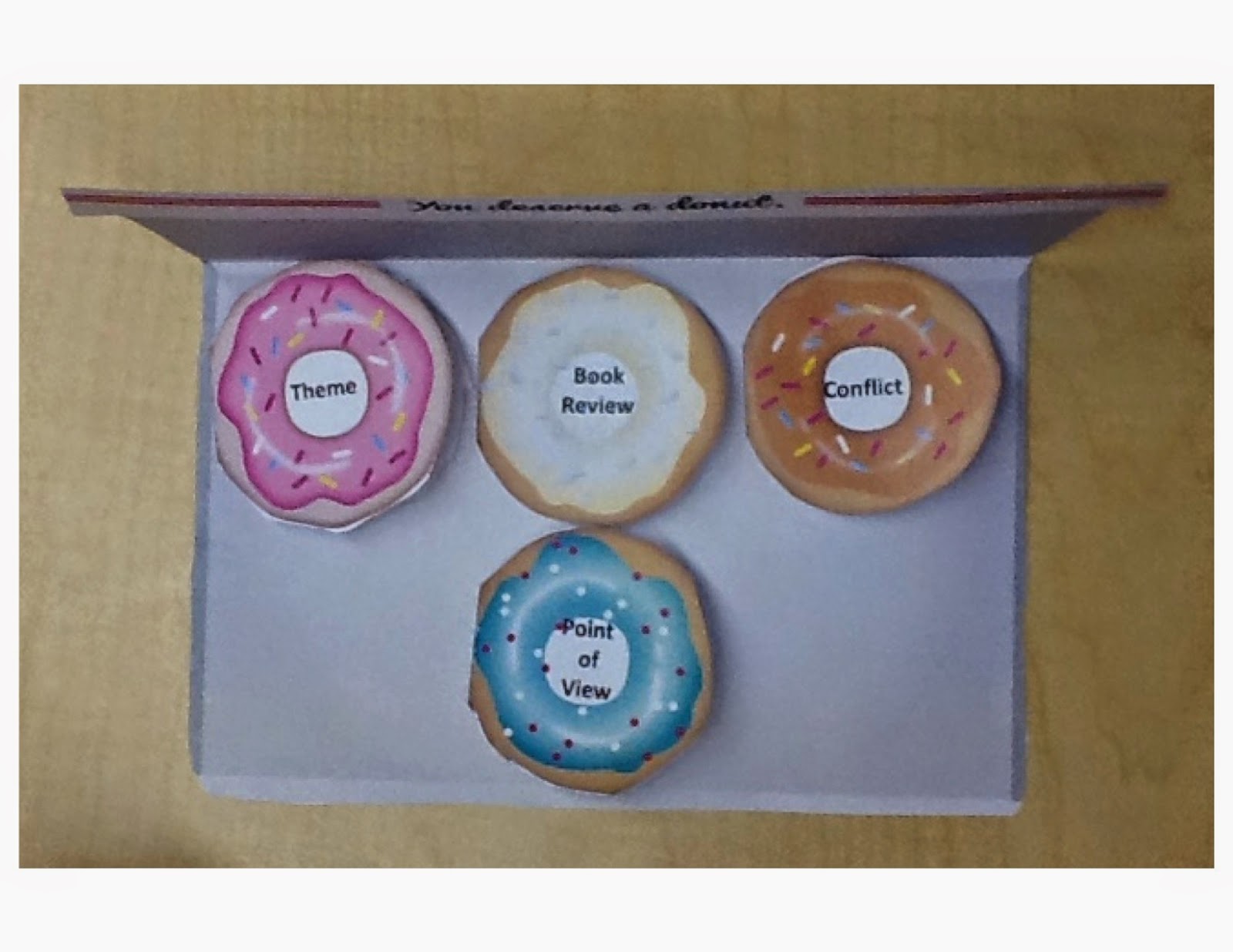
Erin at Learning to be Awesome hosted a fun TPT blog swap.  The purpose of this was to swap a product with a fellow TPT seller, use the product, and write a review of it.  What a blast!  I was so lucky to be paired with Amy Mezni at TeachingIdeas4U.  Amy's products are interactive and engaging.  (Keep reading to find a way to win this product!!!!) It was difficult to pick just one product to use!  I chose Amy's Book of Donuts Book Report Craftivity Project.  It fit so well with the current targets for my fourth grade intervention group.


So, what exactly is this project?  Students read a book at their reading level at home. (We modified this part so that the students could read the book with me, and I could support them with their fluency and decoding.) Students then create a book report by using a variety of text structures including characters (protagonist and antagonist and identifying their traits), theme, conflict, point of view, and book review.  Definitions of protagonist and antagonist are provided as well as a visual for differentiating character traits and character emotions.  (Also included is a list of 25+ traits and emotions each.)  Upon near completion of the project, the students complete a checklist to ensure their projects are finished in their entirety. When the projects are finished, a rubric is filled out by both the student and the teacher.   

My particular group read the book Chrysanthemum together as our focus was also on decoding and fluency.  We reviewed and talked about what is meant by protagonist, antagonist, point-of-view, etc.  Next, we started our project, beginning with the rough draft and citing evidence from the text.

With a bit of guidance, clarification, and feedback, they revised their work. They cut out their donuts and began writing complete sentences to share their thoughts.
Before beginning the messy, gluing process (yes, messy even in fourth grade but still fun!), they were asked to triple check their responses using the rubric as a guide.  Finally it was time to glue!


And … the finished project!


This activity was a perfect balance of instruction and engagement.  It reinforced targets the students are working on this trimester but in a way that was motivating.  They are so proud of their finished projects.  They are perfect for our winter conferences coming up next week!

On a personal note, I really enjoyed working with Amy.  She shared great ideas and resources with me and offered tips to this "newbie" blogger and TPT seller, none of which she had to do but did because she is just that awesome.  I am so thankful and very appreciative!

TeachingIdeas4U and I are each giving away the set of products that we swapped.  You can check out her blog here to read more about the Winter Prefix Practice activity that she used from our store.  Enter on our blog.  Enter on TeachingIdeas4U's blog!  The giveaway starts at midnight tonight and runs through Sunday at midnight.  Good luck!


a Rafflecopter giveaway

Wednesday, December 31, 2014

The Purpose of Author's Purpose


Prior to winter break, one of my fourth-grade reading groups studied author's purpose: the reason an author writes about a topic.  Sounds pretty simple.  After all, in fourth grade, we only covered three reasons: to persuade, to entertain, and to inform.  Yikes.  I couldn't have been more wrong!

I introduced the topic with posters, briefly explaining each one.  We discussed different ways that an author's purpose could be portrayed.  From there we moved to task cards where students identified the author's purpose. They rocked it!  We moved on to text at their reading level, and once again, they rocked it.   I felt so successful.  They were able to identify the author's purpose and provide evidence from the text to support their thoughts.   It just seemed too simple, too good to be true.  And then it hit me.  It WAS too good to be true. (Sigh.)  I realized two different things: the students did not understand the purpose of understanding author's purpose, and they were unable to generalize author's purpose into the world around them.

First, I explained the purpose of author's purpose, emphasizing that it was more than persuading, informing, and entertaining.    I stressed that they needed to be reflective readers.  They needed to think about their reading; they needed to be thoughtful.  By being cognizant of an author's purpose, they could pace their reading.  They could slowly and carefully read informative text while reading text meant to entertain a bit more freely.

Second, the students needed to gain a better perspective of how the purpose could move beyond written text and into the real world.  To engage the students, I found 15 different videos, each represented by a QR code.  They were given a sheet on which they recorded what the purpose of the video was.   After viewing the videos, they discussed them with each other, asking each other questions and using evidence to support their answers.  They loved it!

If you would like to check out this product, you can find it at our TpT store.  Included in the pack are posters, a pre/post-test, 15 QR links to videos, and a recording sheet.


What sources do you use for author's purpose?  Why do you like them?


Thursday, October 23, 2014

Resources to Teach Cause and Effect

Next week with my 4th and 5th grade reading intervention groups we will begin to work on cause and effect in texts. To introduce the concept of the Cause being the "Why" and the Effect being the "What" I plan to use video and some freebies from Teacher's pay Teachers before diving into informative texts and cause effect relationships in books. Here are the amazing resources I have found so far, and if you have any please share a link in the comments below. Many of the resources I found can also be tied into social skills lessons as well to talk about what started events and then what were the consequences or effects. Thank you for reading.


1. Video to Introduce Cause and Effect:


2. Pixar Videos: Here is one entitled, "For the Birds" that I plan on using next week for a brief Cause/Effect Review. We have used this one extensively and maybe have blogged about it before, but great resources can be used over and over. It has many causes and many effects that can be talked about with the birds being to close, too heavy, showing mean stares at each other. I plan to use the video pausing at different intervals to talk about a cause or effect that is happening. Here is the video: 


3. Ameriquest Commerials/Don't Judge Too Quickly Videos: These commercials from the early 2000's are very funny and our students love watching and thinking about Cause/Effect. I have not used them this year but in previous years they have been a big hit. Let me give a disclaimer though, not all the Ameriquest commercials on Youtube are appropriate for my 9-11 year old students. Here are the three that I use, I cannot vouch for the other videos:


4. Teachers Pay Teachers Freebies: These freebies I am posting are ones that other sellers have been so kind enough to post. I am including quite a few so you can find ones to suit the exact age level you need. I found they have cause and effect activities for kindergarten all the way up to 5th grade or higher. I have labeled them by title. 


We hope you Enjoy these Resources!